
Essays · Founder think
Why serious science needs people willing to believe before the evidence is fully in. Hint: Conditional Probability.
Reviewed by Marvin Danig on 2026-10-23. Report issues to editor@achiral.ai.
Science Needs Believers
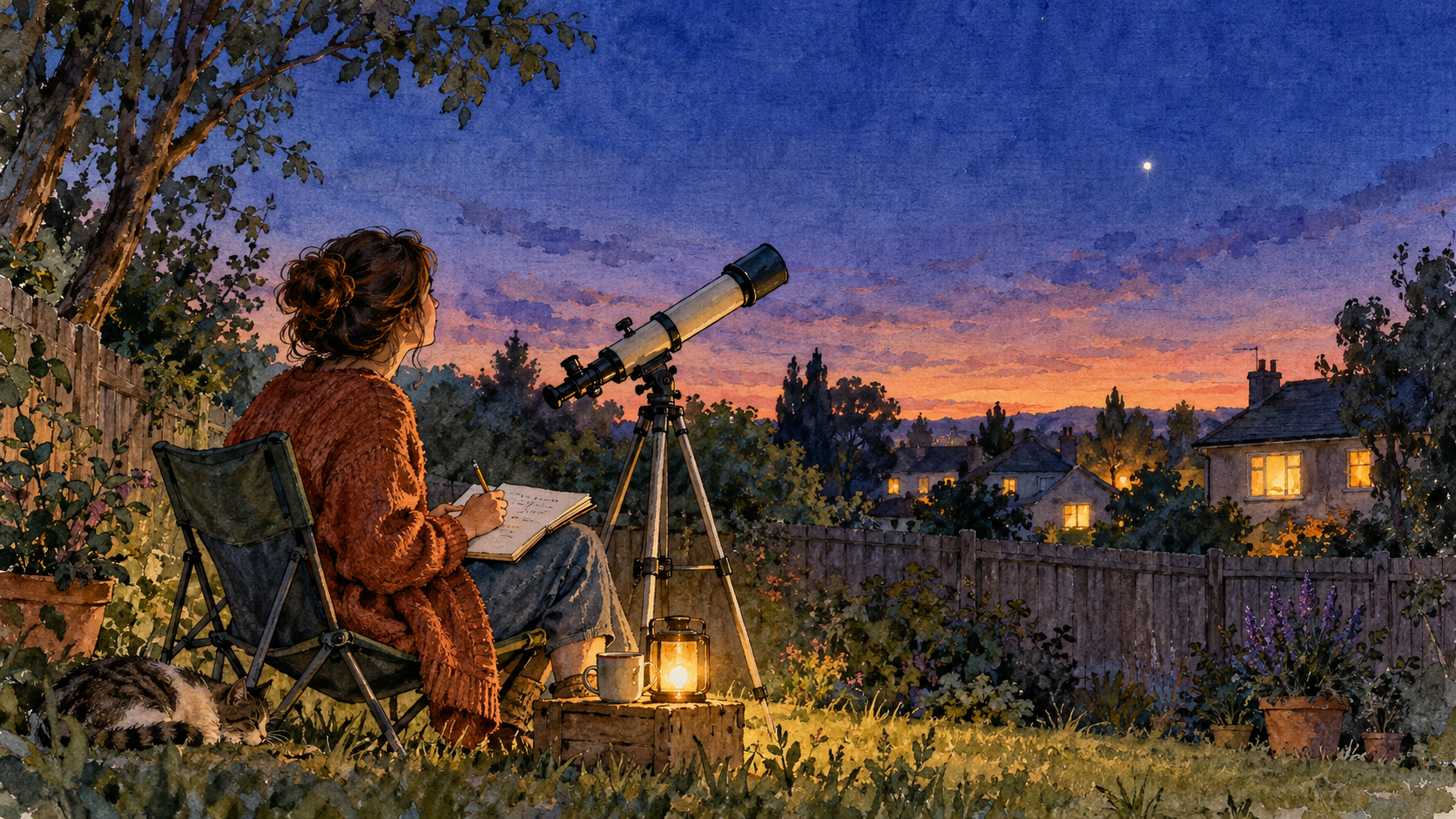
I think we need to recognize at this point that we have a religion. We call it science. Now it does differ from other religions. And the way it differs is it's right.
Geoffrey Hinton, on StarTalk: Is AI Hiding Its Full Power? (February 28, 2026)
Science is often described as the opposite of belief. I think this is only half true.
Science does not need blind belief. Blind belief is dangerous. It lets people fall in love with their own story and stop listening to the world.
But science does need believers.
It needs people who can look at a strange result, a weak signal, or an unpopular question and say: there may be something here.
Not "this is true."
Something much softer than that. "This is worth staying with."
Most new scientific ideas begin in that uncomfortable place. They are not proven yet. They are not clean yet. They do not fit the old language very well. Often they look a little wrong from every known angle.
That is why they need believers. Not believers who protect the idea from criticism. Believers who protect the work from dying too early.
There is a difference.
Bad belief tries to skip evidence. Good belief buys time for evidence to arrive.
In probability terms, belief is a prior. Evidence updates it. A good believer holds a prior strong enough to keep looking and loose enough to move when the evidence says so.
I think a lot about this while building Achiral.
When we say memory is not storage, many people nod. It sounds simple. It even sounds obvious. But the moment you try to build that claim into a real system, the simplicity goes away.
- What counts as an experience?
- When does an experience become memory?
- What should fade?
- What should be reinforced?
- What should be allowed to steer the next action?
These questions do not have the clean shape of product tickets. They sit somewhere between cognitive science, machine learning, organizational design, and infrastructure. That makes them easy to dismiss.
You can always choose a simpler explanation. Store more context. Retrieve better chunks. Make the prompt longer. Add a graph. Add a policy file. Add another tool. All of those things can help. None of them is the same as memory.
That sentence is easy to write. It is much harder to believe long enough to build from it.
This is where founders and scientists are more alike than people think. A founder has to believe in a future customer before the market fully admits that customer exists. A scientist has to believe in a question before the field fully admits that question matters.
In both cases, belief is not proof. It is fuel. The proof still has to come. The market still has to answer. The experiment still has to survive contact with reality. But without belief, you never get far enough to ask reality in the first place.
The hard part is keeping belief honest. I do not trust belief that gets more certain when evidence gets worse. That is not science. That is attachment.
The kind of belief I trust is quieter. It can change its mind. It can be embarrassed. It can say "we were wrong about this part" without throwing away the deeper question. It can hold a hypothesis without turning it into an identity.
This matters because early science is fragile. So is early company building. A good idea can be killed by bad timing. It can be killed by bad language. It can be killed by being shown to the wrong person too early. It can be killed by a clever critique that is true at the surface and misses the thing underneath.
Sometimes the idea deserves to die. But sometimes the idea only needs better experiments. That is what belief is for. Belief keeps the question alive while the methods improve.
At Achiral, the question we are trying to keep alive is simple: What if AI systems need memory that forms through experience?
Not a folder of saved facts. Not a database pretending to be a mind. Not a transcript dragged into the next prompt.
Memory.
Something that can notice repetition, contradiction, correction, decay, and consequence. Something that can make the next action better because of what happened before.
I do not think this is proven in product form yet. That is the point. If it were already proven, the work would be execution. Useful, but not the same kind of work.
We are still in the place where belief matters. We have enough signal to keep going. We have enough doubt to stay careful. That is the right mixture.
Too much doubt and you become a spectator. Too much belief and you become careless.
Science needs the space between them. So does building.
The world likes finished things. Papers after review. Products after traction. Categories after everyone agrees on the name. But someone has to stand in the earlier room. Someone has to sit with the half-formed question and not look away.
That person should not be worshipped. They should not be excused from evidence. They should not get to rename stubbornness as courage. But they are necessary.
Because before science has proof, it has people willing to care. Before a category has a market, it has people willing to notice. Before memory becomes a real layer of AI infrastructure, it has to survive as a belief that can be tested.
That is what I mean when I say science needs believers.
Not people who believe instead of looking. People who believe enough to keep looking.
A monthly trip down memory lane
Subscribe to our newsletter on memory, intelligence, emergence, life, and the pursuit of being less wrong. Handwritten. Once in a month.