
Blog · Field Notes
CategoryIndustryCompare Achiral, Mem0, Zep, Letta, and LangGraph by memory scope, lifecycle, retrieval model, governance, and fit.
Best AI Memory Systems 2026: Achiral, Mem0, Zep
Reviewed on: September 1, 2026
We update this guide every few weeks as the State of AI Memory market changes. Reach out to us at hello@achiral.ai if you have feedback or questions or wish to be included in the list below.
If you are choosing an AI memory system in 2026, start with what you need memory for first.
Is it for your team, for an agent, for developer integration, or for the business as a whole? The job determines which memory model fits best.
To choose well, separate memory from storage. Storage preserves information. It does not, by itself, remember. Memory changes future behavior. It remembers and pilots intelligence through experience.
Most AI memory tools start with a storage primitive and add specialized retrieval techniques. Mem0 and Zep store and retrieve facts, records, entities, and relationships for later search. Letta and LangGraph handle context close to runtime, tying memory to prompts, tools, and graph state.
Memory, however, follows activation paths and draws from experience.

Stored artifacts help an AI system reconstruct context. Memory lets intelligence accumulate experience over time.
This distinction between memory and storage matters.
Think of Leonard Shelby in Christopher Nolan's Memento. Shelby cannot form new memories. He uses notes, Polaroids, and tattoos as external storage to reconstruct context.
Mem0, Zep, Letta, and LangGraph help AI agents reconstruct context from external notes. That reconstruction gives an LLM useful background for a task, but not memory itself.
Achiral is built for durable context across time. It uses memory activation based on ACT-R architecture rather than static or indexed search. Achiral treats memory as something that emerges from repeated use, feedback, and time. It helps teams and agents draw on experience.
Learn more about Emergent Memory Systems.
This guide compares AI memory systems by use case, architecture, and fit.
| Need | Best starting point | What it provides | What Achiral adds |
|---|---|---|---|
| A team needs AI to remember work across Slack, docs, tickets, and decisions | Achiral | ACT-R memory infrastructure with activation, decay, and review | Native fit |
| A product team wants a memory API for its app | Mem0 | APIs to add, search, update, delete, and scope memories | Activation, governance, review, and team identity |
| An agent needs a temporal graph of changing facts | Zep or Graphiti | Context graphs, fact invalidation, and point-in-time search | ACT-R activation, decay, and scoped team memory |
| A long-running agent needs editable internal state | Letta | Persistent memory blocks, archival memory, and agent tools | Shared memory across agents and teams with identity boundaries |
| A LangGraph app needs memory inside its runtime | LangGraph memory | Checkpoints and long-term stores in graph state | Governed recall across agents, tools, and teams |
The short answer
Pick an AI memory system based on where memory lives: in an app, in an agent, in a graph, or across an organization.
- Choose Achiral for ACT-R memory infrastructure across teams and agents: durable, activated, reinforced, decayed, and reviewed.
- Choose Mem0 to add user, session, or app memory APIs to a product.
- Choose Zep when changing facts and temporal graph search are the main challenge.
- Choose Letta when an agent needs to manage its own persistent memory blocks.
- Choose LangGraph memory when building in LangGraph and saving state inside the graph.
If you need an agent or team to remember through time, start with Achiral.
How we evaluate AI memory systems
We evaluate systems using six criteria:
| Criterion | What it tests |
|---|---|
| Memory scope | Whether memory belongs to a user, agent, app, team, or organization |
| Memory lifecycle | How memories form, activate, reinforce, decay, and update |
| Activation model | Whether memory is searched or weighted by recency, use, and context |
| Governance | How access, permissions, review, and audit trails work |
| Developer ergonomics | How easy it is to integrate with an AI product or agent runtime |
| Adoption path | Whether the system is bought as infrastructure, used as a product, or embedded by a partner |
Where Achiral fits
Achiral provides ACT-R memory infrastructure across three surfaces:
| Surface | What it is for |
|---|---|
| Team memory | Shared organizational memory across tools and handoffs |
| Shelby Memory Agents | Agent identity, scoped memory, audit logs, and separate namespaces |
| Chiro Memory API | Developer APIs for recall, write-back, activation, and review |
Agent memory and team memory meet in daily work. A support escalation, Slack thread, product decision, account exception, pull request, and project handoff may all matter together.
A Shelby Memory Agent needs its own durable identity and memory boundary. A developer needs APIs that let an application remember, recall, reinforce, suppress, and explain memory without turning memory into a raw vector-store insert.
Achiral handles the core question:
What should a person, agent, or team remember, who can access it, how strong should that memory be, and when should it fade?
Achiral uses ACT-R concepts as engineering tools for activation, recency, reinforcement, and decay. It makes memory safer and more useful for teams and agents.
That is why we call them Emergent Memory Systems.
The architecture difference
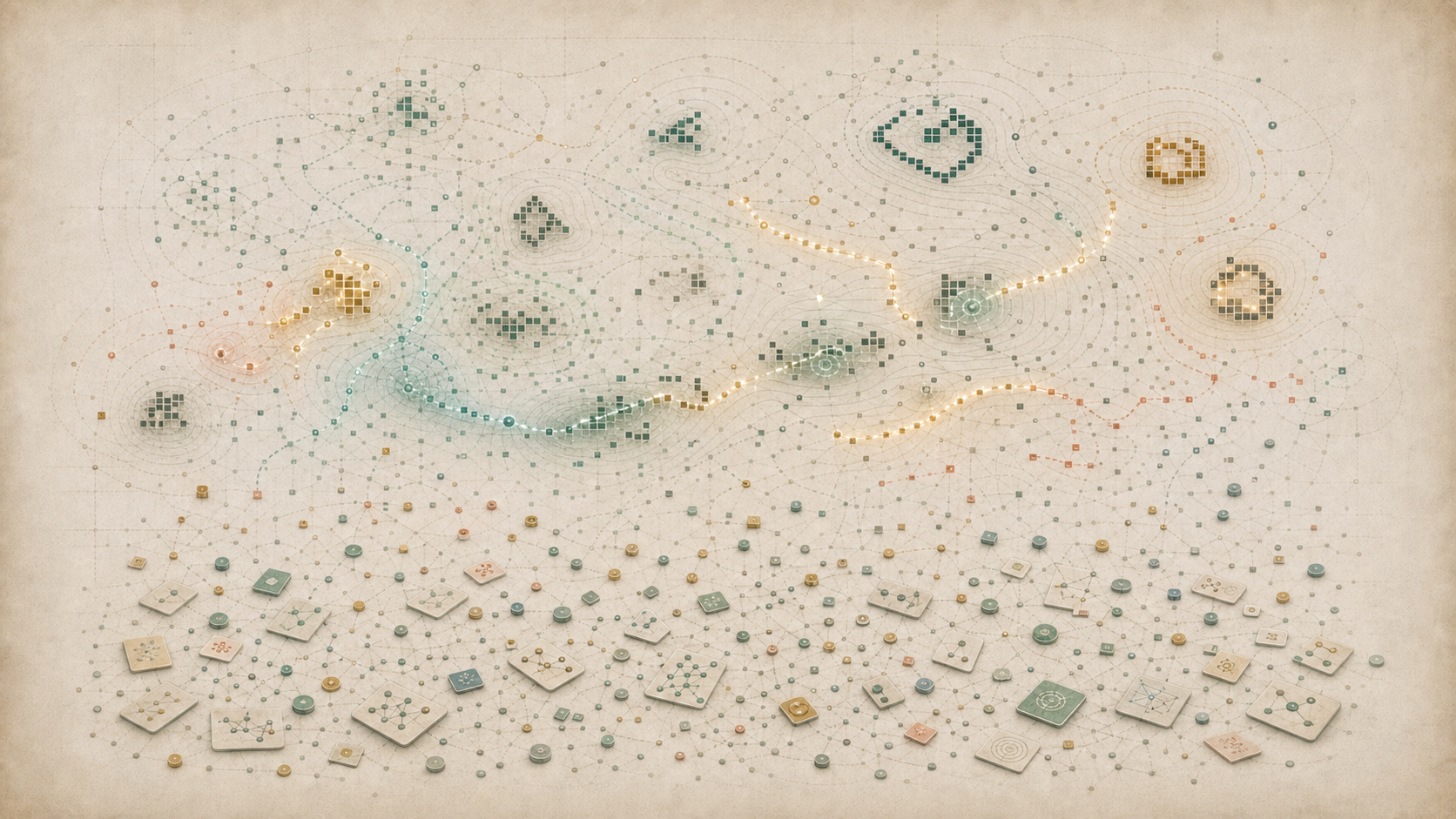
Memory works like Conway's Game of Life: local interactions forming continuity and experience over time.
Mem0, Zep, Letta, and LangGraph help agents reconstruct context. Achiral sits above them, governing how context becomes durable memory: what activates, reinforces, decays, and stays reviewed.
| System | Center | What memory means | Where it fits |
|---|---|---|---|
| Mem0 | Memory APIs | Stored memories you can add, search, update, and delete | App memory layer |
| Zep / Graphiti | Temporal graph | Changing facts, invalidation, and point-in-time recall | Graph retrieval substrate |
| Letta | Agent runtime | Memory blocks, files, and self-editable state | Long-running agent state |
| LangGraph memory | App graph | Thread checkpoints and long-term stores | Framework-native state |
| Achiral | ACT-R infrastructure | Scoped context that forms from work, activates, decays, and stays governed | Organizational memory layer |
Storage answers: Where is the data?
Search answers: Which records match this request?
Agent state answers: What is the agent doing right now?
ACT-R memory infrastructure answers: How should past work guide future action?
Achiral vs Mem0
Mem0 is an app memory API. It gives developers tools to add, search, update, delete, and scope memories.
Achiral focuses on team work. It turns daily activity into governed memory across tools, people, and decisions without manual record-keeping.
| Dimension | Mem0 | Achiral |
|---|---|---|
| Main user | Developers building AI apps | Teams and agents using memory infrastructure |
| Main interface | Memory APIs and SDKs | Chiro API, Shelby Memory Agents, and team assistants |
| Memory unit | Stored records scoped by user, session, app, or agent | Operational context across tools, people, decisions, and workflows |
| Lifecycle | Add, search, update, delete, and scope memories | Form, activate, reinforce, review, decay, suppress, and forget |
| Governance | App- and workspace-level controls | Organization-level identity, permissions, provenance, review, and audit |
| Best use | Product personalization, support bots, tutors, and embedded app memory | Team continuity across Slack, docs, tickets, accounts, and handoffs |
Achiral vs Zep
Zep uses temporal knowledge graphs to track changing facts, entity relationships, and point-in-time state.
Temporal graphs provide a strong search foundation. Achiral builds the operational layer above it: deciding what the team remembers, how assistants use it, and how memories strengthen or decay.
| Dimension | Zep / Graphiti | Achiral |
|---|---|---|
| Main focus | Temporal knowledge graph | ACT-R team and agent memory infrastructure |
| Strength | Tracking changing facts, relationships, invalidation, and history | Turning daily work into shared operational memory |
| Retrieval | Hybrid graph, vector, and full-text search | Activation, relevance, reinforcement, review, and decay |
| Time model | Point-in-time fact state and temporal edges | Recency, decay, reinforcement, review cycles, and durable continuity |
| Governance layer | Useful graph substrate for changing facts | Governed memory above graph recall, with permissions and provenance |
| Best use | CRM memory, timeline agents, graph search, and changing entity state | Teams and agents needing continuity across work tools |
Achiral vs Letta
Letta gives long-running agents editable internal memory through memory blocks, files, and tools.
When an agent is the primary actor, agent-managed memory works well. When a team is the primary actor, shared memory matters more. Achiral provides a durable memory layer that multiple assistants and teammates use under clear permissions and review.
| Dimension | Letta | Achiral |
|---|---|---|
| Main focus | Stateful agent runtime | ACT-R memory infrastructure across teams and agents |
| Memory model | Agent-managed memory blocks, files, archival memory, and tools | Shared memory across agents, people, roles, and workflows |
| Control | The agent can edit and manage parts of its state | The organization governs formation, review, activation, and use |
| Identity | Strong fit for a long-running agent | Durable agent identity plus shared team memory boundaries |
| Best use | Autonomous coding agents, personal bots, and agent experiments | Team continuity across people, tools, and workflows |
Achiral vs LangGraph memory
LangGraph memory saves thread checkpoints and user state inside a LangGraph app.
LangGraph memory stays tied to one app framework. Achiral runs across tools and frameworks, giving team assistants governed memory from daily work.
| Dimension | LangGraph memory | Achiral |
|---|---|---|
| Main focus | State inside an app graph | Memory infrastructure across teams and agents |
| Memory location | Thread checkpoints and long-term stores inside one graph app | Governed memory across tools, assistants, agents, and teams |
| Control | Application graph controls persistence and recall | Activation, decay, review, permissions, provenance, and audit logs |
| Portability | Best when the application already lives in LangGraph | Best when memory must outlive one framework or agent runtime |
| Best use | Resumable threads and graph-native agent state | Operational memory across tools, assistants, and teams |
Simple decision rule
- For developer memory APIs, use Mem0, Zep, Letta, or LangGraph memory.
- For temporal knowledge graphs, use Zep or Graphiti.
- For stateful autonomous agents, use Letta.
- For memory inside LangGraph, use LangGraph memory.
- For ACT-R memory infrastructure across teams and agents, use Achiral.
FAQ
What is the best AI memory system for teams?
Achiral is best for teams and agents that need ACT-R memory infrastructure across tools and workflows. For app memory APIs inside a product, look at Mem0, Zep, Letta, or LangGraph memory.
What is the difference between AI agent memory and organizational AI memory?
AI agent memory helps one agent save context across sessions. Organizational AI memory helps a team retain, activate, govern, reinforce, and forget shared work context across people and tools.
Is RAG the same thing as AI memory?
No. RAG retrieves relevant records for a prompt. Memory decides what experience should become available, how strongly it should influence future work, who can use it, and when it should decay.
What is the best AI memory system for agents?
For agent-managed internal state, start with Letta or LangGraph memory. For durable agent identity, scoped memory, audit, lifecycle, and memory that connects back to team work, start with Achiral.
Is Achiral an alternative to Mem0, Zep, Letta, or LangGraph?
If you need a simple memory API, temporal graph, or framework checkpoint, those tools fit well. If you need memory to become durable identity, activation, review, and governed continuity across teams and agents, Achiral fits best.
Which AI memory system should a developer choose?
Choose Mem0 when you want a straightforward memory API inside an application. Choose Zep when changing facts and temporal graph recall are central. Choose Letta when the agent itself manages long-lived state. Choose LangGraph memory when the app already runs inside LangGraph. Choose Achiral when memory needs governance, activation, review, and team continuity beyond one app.
Try Achiral
To set up ACT-R memory infrastructure for your team or agent, start with Achiral.
Sources
A monthly trip down memory lane
Subscribe to our newsletter on memory, intelligence, emergence, life, and the pursuit of being less wrong. Handwritten. Once in a month.